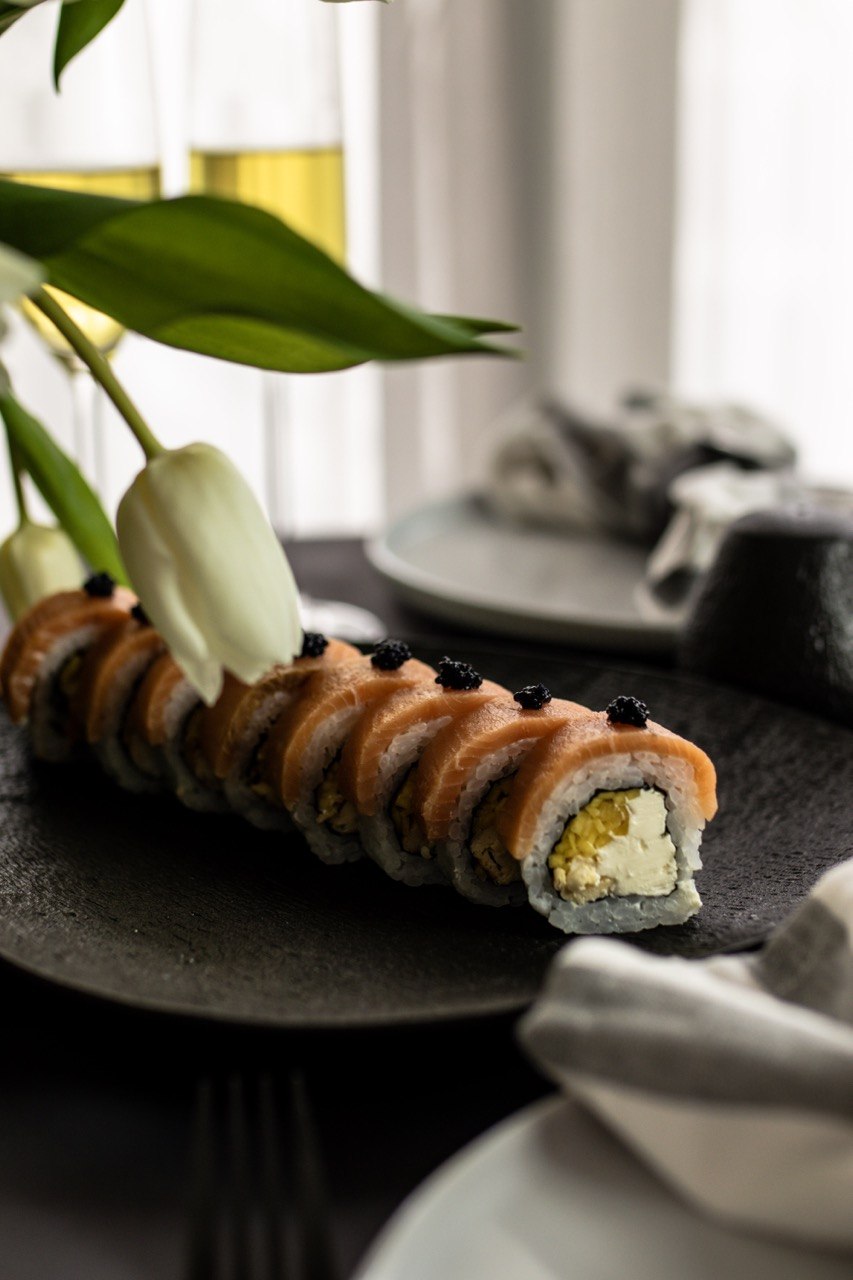
The best sushi sauces do more than simply add flavor — they enhance every ingredient and create a richer, more balanced dining experience. The right sauce highlights the texture of fish, seafood, vegetables, and sushi rice, making each bite even more enjoyable. That is why it is worth knowing which sauce pairs best with different types of sushi. In Japanese cuisine, the accompaniments are just as important as the sushi itself.
Soy Sauce, Wasabi and Pickled Ginger for Sushi
The most well-known accompaniment is soy sauce for sushi. It should be used sparingly so that it does not overpower the natural flavors of the ingredients. If a sushi roll is dipped too deeply, the rice quickly absorbs too much liquid and loses its texture. For this reason, experienced sushi lovers recommend lightly dipping only the side with the topping or filling into the soy sauce.
Wasabi and pickled ginger are equally important. Wasabi adds its signature heat but should be enjoyed in moderation. Pickled ginger is not meant to be placed on top of sushi. Instead, it is eaten between different types of sushi to cleanse the palate and allow the unique flavors of each variety to be appreciated more clearly.
Unagi Sauce, Spicy Mayo and Teriyaki Sauce for Sushi Rolls
For those who enjoy richer flavors, unagi sauce is a popular choice. Its thick consistency, subtle sweetness, and caramel-like notes pair perfectly with baked sushi rolls, eel, and shrimp. Another favorite is spicy mayo for sushi, which adds a creamy texture and gentle spiciness. It complements sushi made with salmon, tuna, crab, or seafood particularly well.
Another widely used option is teriyaki sauce for sushi rolls. It is commonly served with chicken, eel, salmon, or warm sushi rolls. Its combination of sweet and savory flavors creates a rich finish and gives familiar sushi combinations extra depth. The wide variety of sushi sauces allows people to discover new flavor experiences even with rolls they have enjoyed many times before.
Japanese Sauces, How to Eat Sushi with Sauce and Spicy Sauces
Traditional Japanese sushi sauces form a category of their own. Their recipes have been refined over many years and are designed not to mask the flavor of the fish but to enhance it subtly. Japanese cuisine places such a strong emphasis on ingredient quality, balanced flavors, and moderation when serving sauces.
Many people also wonder how to eat sushi properly with sauce. The most important rule is not to use too many condiments at the same time. If a sushi roll already contains a signature sauce, dipping it into soy sauce as well may make it overly salty. For those who enjoy bold flavors, spicy sushi sauces are an excellent choice — they pair especially well with warm sushi rolls, tuna, and baked seafood. Choosing the right sauce allows every ingredient to shine.