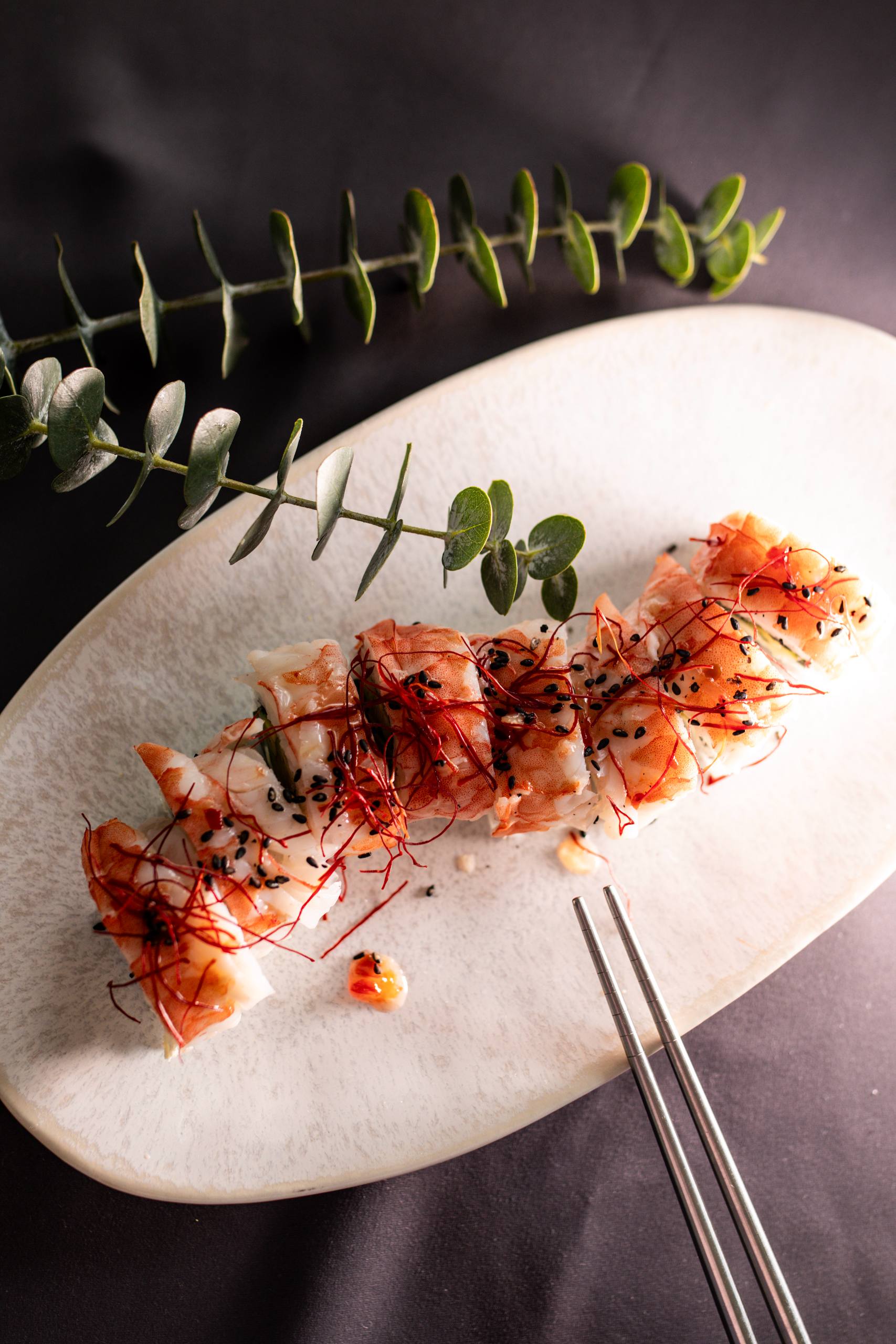
How should you store sushi properly? This is a common question whenever a few pieces are left after placing an order. Proper storage affects not only the taste of sushi but also its safety. Since sushi is prepared with fresh ingredients, it requires careful handling. Following a few simple recommendations helps preserve the quality of sushi rolls for as long as possible.
Shelf Life of Sushi and How to Store Sushi Rolls in the Refrigerator
Most types of sushi are made with fresh fish, seafood, rice, and vegetables, making them highly perishable foods. The best option is to keep them in their original packaging or transfer them to a clean container with a tightly fitting lid.
One of the most common questions is how long sushi can be stored after delivery. If the rolls contain raw fish or seafood, they are best eaten on the day they are prepared. The shelf life of sushi is much shorter than that of most prepared meals. When storing sushi rolls in the refrigerator, ideally place the container on the middle shelf and keep it tightly closed, as sushi rice dries out quickly and nori seaweed loses its texture when exposed to air.
Can You Eat Sushi the Next Day and Storing Salmon Sushi
Many people also wonder whether it is safe to eat sushi the next day. If it has been refrigerated continuously and there are no changes in smell, color, or texture, the risks are lower. However, the flavor and texture will no longer be as fresh as they were immediately after preparation. If sushi has been left at room temperature for several hours, it is best not to eat it.
Special care should be taken when storing salmon sushi. Since salmon is highly sensitive to temperature changes, it is important to maintain the cold chain. If the sushi is delivered chilled, it should be placed in the refrigerator immediately and not left on the table unnecessarily.
Storing Baked Rolls and Sushi Without Refrigeration
Baked sushi rolls also require proper storage. Although they have been cooked, they are not intended to remain at room temperature for extended periods. Before eating them again, they may be gently reheated, but excessive heating should be avoided to prevent the rice and filling from drying out.
Sometimes people need to know how to store sushi without refrigeration. In such cases, the time outside the refrigerator should be kept to an absolute minimum, especially during warm weather. By following simple sushi storage guidelines, you can preserve the quality and safety of your meal for as long as possible. The best approach is always to order only the amount you plan to eat immediately.